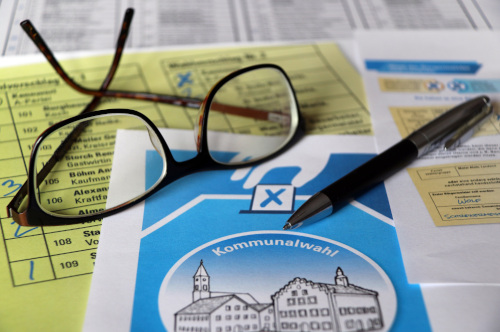
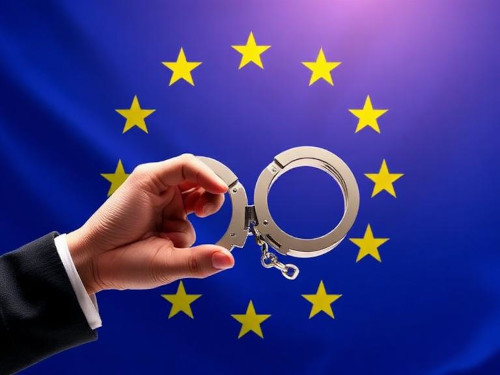
Last week's Hungarian parliamentary elections received heightened media attention, amplified further by a series of measures reportedly prepared by European Union institutions in the event of Viktor Orbán's re-election. Ultimately, Orbán lost the elections in favor of Péter Magyar.
Viktor Orbán has long been a critic of several EU policies, most notably on irregular, uncontrolled migration. A decade ago, migration management was framed by Western European governments as a core pillar of European solidarity. Today, those same governments face a continent-wide crisis, struggling both to control the situation and to shape the public narrative. Hungary consistently refused to accept asylum seekers under EU quota schemes.
While the impact of large-scale population movements on local communities varies across member states, few Western political leaders have been willing to articulate or address these concerns directly. Orbán did so, placing him on a direct collision course with European Commission President Ursula von der Leyen.
Another major point of contention has been EU policy toward Ukraine. Under a strongly Russophobic campaign, hundreds of billions of euros have been directed toward Ukraine and, more recently, toward EU rearmament—often at the expense of addressing the bloc's broader economic difficulties. Compounding this, Ukraine's decision to halt oil flows through the Druzhba pipeline (which supplies Hungary and Slovakia) prompted Orbán to veto the proposed €90 billion loan facility to Ukraine. This veto did little to alter the broader policy direction. Rather than defending a member state's interests, the European Commission took an adversarial stance toward Hungary and its prime minister.
However, the political landscape in Budapest has shifted. The new Hungarian Prime Minister is Péter Magyar.
From his press conference:
Unblocking EU Funds
Magyar is now widely seen as a preferred partner in Brussels. EU funds had been suspended as a mechanism to pressure Orbán into adopting certain policy positions. Unblocking them would mark a clear departure from the previous confrontational dynamic.
Eurozone Accession
"Magyar said his government would evaluate joining the eurozone, a key campaign pledge."
Keyword: evaluate.
Magyar has indicated a willingness to evaluate eurozone membership. However, joining the eurozone would effectively end Hungary's monetary independence. The Greek financial crisis serves as a cautionary example: the constraints of eurozone membership proved particularly damaging during that prolonged downturn.
Opt-Out on the Ukraine Loan
"He stressed that Ukraine cannot be compelled to accept a peace deal that requires it to cede territory."
It remains to be seen how this position will play out. Ukraine, despite substantial backing from the United States, NATO, and the European Union, does not currently appear capable of regaining lost territories or restoring its previous borders. Russia, for its part, has shown no inclination switch to gifts mood.
"On the EU's €90 billion loan package to Ukraine, Magyar said he supports Hungary's opt-out, negotiated by the Orbán government, citing Hungary's bad budgetary situation."
Hungary has maintained its opt-out from the Ukraine loan facility. Magyar has signaled that he will unblock the loan for other member states while shielding Hungary from its fiscal effects—a position enabled by Orbán's earlier negotiations.
Consequently, most other European taxpayers (with the exception of Slovakia and the Czech Republic) will bear the long-term cost of this instrument.
Continued Purchase of Russian Oil
"If Vladimir Putin calls, I'll pick up the phone. If we did talk, I could tell him that it would be nice to end the killing after four years and end the war."
Ok, joke aside...
"On energy, Magyar said the country will continue purchasing Russian energy and prioritise the cheapest available oil, a stance that appears to contrast with his campaign pledge to phase out Russian energy imports by 2035."
Hungary shows no immediate intention of altering its energy procurement strategy.
Opposition to the EU Migration Pact
"There are other countries that have managed to comply with EU law without allowing irregular migrants to enter. If Slovakia and Poland could solve this, then so can we."
Magyar has stated his opposition to the EU's Migration Pact and his intent to preserve the border fence erected under the Orbán government.
Outlook
It remains unclear how these positions will evolve in practice. Magyar may reverse any of the above policies, or he may choose to continue Orbán's legacy of prioritizing Hungarian national interests over Brussels' preferences. If he navigates the relationship skillfully, he could offer the European Commission symbolic concessions that do not materially affect Hungary, thereby avoiding direct conflict with Commission leadership.
For now, beyond a change in personnel, little has changed substantively. The core policies Orbán championed remain intact. The coming months will reveal whether Hungary maintains its current sovereign stance or moves toward greater alignment with EU institutional priorities.